|
Archives 12/30/01, 1/1/02, 1/2/02, 1/3/02, 1/4/02, 1/7/02, 1/8/02, 1/09/02, 1/10/02, 1/11/02, 1/14/02, 1/15/02, 1/16/02, 1/17/02, 1/18/02, 1/22/02, 1/23/02, 1/24/02, 1/25/02, 1/28/02, 1/29/02, 1/30/02, 1/31/02, 2/1/02, 2/4/02, 2/5/02, 2/06/02, 2/7/02, 2/9/02, 2/11/02, 2/12/02, 2/13/02, 2/14/02, 2/16/02, 2/19/02, 2/20/02, 2/21/02, 2/23/02, 2/25/02, 2/26/02, 2/27/02, 2/28/02, 3/1/02, 3/04/02, 3/05/02, 3/06/02, 3/7/02, 3/10/02,3/11/02, 3/12/02, 3/13/02, 3/14/02, 3/15/02, 3/18/02, 3/19/02, 3/20/02, 3/21/02, 3/22/02, 3/25/02, 3/26/02, 3/28/02, 3/30/02 4/1/02, 4/2/02, 4/3/02, 4/4/02, 4/6/02, 4/8/02, 4/9/02, 4/10/02, 4/11/02, 4/13/02, 4/15/02, 4/16/02, 4/17/02, 4/18/02, 4/20/02, 4/22/02, 4/23/02,4/24/02,4/25/02, 4/26/02, 4/27/02, 4/29/02, 4/30/02 5/01/02, 5/2/02, 5/4/02, 5/6/02, 5/07/02, 5/8/02, 5/09/02, 5/10/02, 5/13/02, 5/14/02, 5/15/02, 5/16/02, 5/17/02, 5/20/02, 5/21/02, 5/22/02, 5/23/02, 5/24/02, 5/28/02, 5/29/02, 5/30/02 6/01/02, 6/3/02, 6/4/02, 6/5/02, 6/6/02, 6/7/02, 6/10/02, 6/11/02, 6/12/02, 6/13/02, 6/14/02, 6/17/02, 6/18/02, 6/19/02, 6/20/02, 6/22/02, 6/24/02, 6/25/02, 6/26/02, 6/27/02, 6/30/02 7/1/02, 7/4/02, 7/5/02, 7/11/02, 7/14/02, 7/15/02, 7/16/02, 7/17/02, 7/18/02, 7/19/02, 7/22/02, 7/23/02, 7/24/02, 7/25/02, 7/27/02, 7/29/02, 7/30/02 8/1/02, 8/3/02, 8/5/02, 8/6/02, 8/7/02, 8/8/02, 8/10/02, 8/12/02, 8/13/02, 8/14/02, 8/15/02, 8/16/02, 8/19/02, 8/20/02, 8/21/02, 8/22/02, 8/23/02, 8/26/02, 8/27/02, 8/28/02, 8/29/02, 8/30/02 9/3/02, 9/4/02, 9/5/02. 9/6/02, 9/9/02, 9/10/02, 9/11/02, 9/12/02, 9/13/02, 9/16/02, 9/17/02, 9/18/02, 9/19/02, 9/20/02, 9/23/02, 9/24/02, 9/25/02, 9/26/02, 9/27/02, 9/30/02 10/1/02, 10/2/02, 10/3/02, 10/4/02, 10/7/02, 10/8/02, 10/9/02, 10/10/02, 10/11/02, 10/14/02, 10/15/02, 10/16/02, 10/17/02, 10/18/02, 10/21/02, 10/22/02, 10/23/02, 10/24/02, 10/25/02, 10/28/02, 10/29/02, 10/30/02, 10/31/02 11/1/02, 11/4/02, 11/5/02, 11/6/02, 11/7/02, 11/8/02, 11/11/02, 11/12/02, 11/13/02, 11/14/02, 11/15/02, 11/18/02, 11/19/02, 11/20/02, 11/21/02, 11/22/02, 11/25/02, 11/26/02, 11/27/02, 11/29/02 12/2/02,
12/3/02, 12/4/02,
12/5/02 1/1/03, 1/2/03, 1/03/03, 1/6/03, 1/7/03, 1/8/03, 1/9/03, 1/10/03, 1/13/03, 1/14/03, 1/15/03, 1/16/03, 1/17/03, 1/21/03, 1/22/03, 1/23/03, 1/24/03, 1/27/03, 1/28/03, 1/29/03, 1/30/03, 1/31/03 2/3/03, 2/4/03, 2/5/03, 2/6/03, 2/7/03, 2/10/03, 2/11/03, 2/12/03
 Doc's view of the Street. |
The Anals of Stock ProctologyPublished weeknights by
8:30PM Happy Acres, Florida Time The American
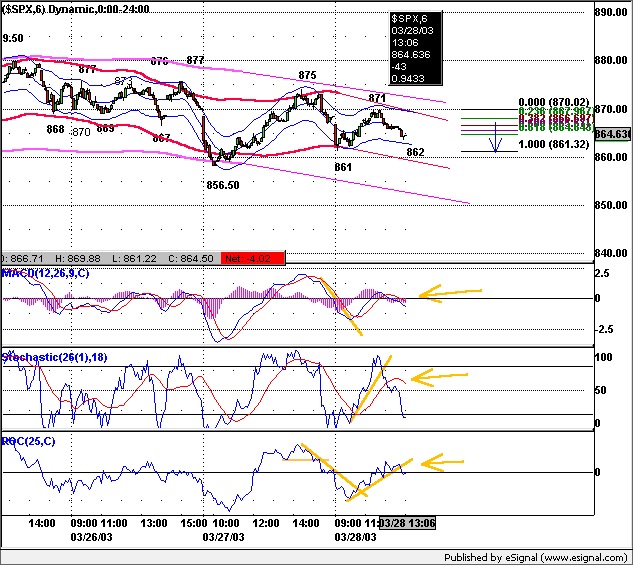
Academy of Stock Proctology and Is your subscription up for renewal? If you want to renew, do nothing, unless your credit card has expired. Please be sure your credit card info is current. If your credit card has expired, you must enter the new expiration date in your Paypal account in order for your subscription to be processed. If you subscribed via Paypal, your subscription will be renewed for one year on the 90 day anniversary of your sign-up and your credit card will be charged. If you want to cancel, use the button at the bottom of the page. This applies only if you subscribed through Paypal. Mailed-in subscriptions are for 1 year. If you subscribed by prior contribution, I will send you a notice before your subscription expires. If you have any questions, see the subscription page and FAQ's. If you can't find the answer, email me. Big Fine Print Doc does not make trading recommendations. This update reports time cycle estimates and centered moving average projections based on the Hurst cycle analysis method, and other techniques. This publication is for entertainment and educational purposes only. Doc assumes no responsibility for the accuracy or inaccuracy of the estimates and projections presented. The market may or may not meet the projections. Stoolies should thoroughly familiarize themselves with the methodology before trading based on this method. Those who do not have the time or inclination to develop a trading strategy based on testing and research should not trade. Trade at your own risk. Yadda yadda. How's your motha? More disclaimers at the bottom of the page. Intraday Updates 2/14/03 12:45 That was fun. We got a hysterical short covering blowoff that blew out all the cmaps. IT promptly reversed, forming a Finger to top out the 3 day cycle. 1 day cycle low is due between 12:30 and 2 PM, then some recovery into the close as shorts cover ahead of the 3 day weekend. Chart below. Get regular updates throughout the day in Stooltrading. Pre Market Update at 9:15 AM NY time. 9:15 AM Fucutures are up this morning. The upside cmap of 821 was hit, with a high of 822.50 and they're hovering around 820 just prior to the pre market close. Doc expects a 5 hour cycle high in the first hour and a 1 day cycle high by 12:00 if the 1 day wave is dominant over the 5 hour wave. The highs should hit 821 through 822.50. After that the degree of pullback will tell us something about the strength of the swup in the 8 through 6-7 week cycles. Intraday Turdsday - After opening weak and drifting quietly lower without apparent cyclicality, the market blindsided Doc with a huge ramp off a 3 day and possibly 8-13 day cycle low. Significant upside follow through is possible but not likely. This kind of action indicates a short squeeze. Once exhausted the market reverses rapidly. The initial upside cmap on the 3 day cycle is 821, and that has already been hit. In the bigger picture this is inconsequential. A three day cycle high is due now. With the lack of clarity in intraday cycles Doc will only guess that if the squeeze was not exhausted at the end of the day, that it will be shortly after the open. A 5 hour cycle low is due around 1 PM. By then we should have some idea whether this up phase is a shooting star or can hang around for a few days. Get StoolieSignal Special offer here only! The cycle map below is en estimate of how the market might behave over the next few hours. Should the pattern be broken, the map should be redrawn to fit the actual. Cmaps and times shown are guidelines only. Cycles vary in wavelength and amplitude. Directional changes within an hour of the expected turn and a few points of the cmap should be respected. The indicators rule. Times and prices are the projected cycle highs and lows with cmaps. 5-8 Day Cycle______ 2-3 Day Cycle_______ 5 Hr-1 Day Cycle
Turdsday's
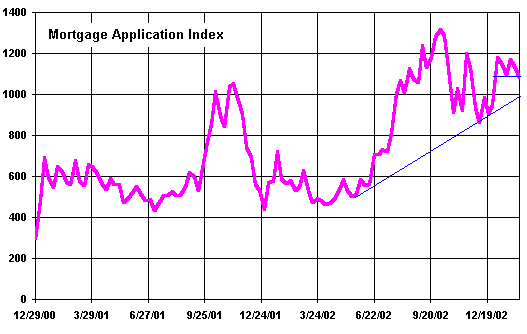
Markets Fed Turdsday Releases and Other Goodies 2/13/03 Today is Turdsday. You know what that means. We pause for a moment to review the Fed's weekly releases for context and perspective. Money, after all, makes the world go round. It's what drives sentiment and the markets. The more we have the more we gamble, and vice versa. Of course sometimes more is less, such as when the mushrooming destruction of an unstable credit bubble creates a need for ever more credit, a need which cannot be met. When that happens, folks are very unhappy indeed. Such are the times we live in now. Fist, a reminder that what drives this mess is the mortgage credit bubble, and that you must keep up with your reading of Doug Noland's Credit Bubble Bulletin, for the what's and wherefores of this mess. The charts below just give you a brief summary of the problem as Doc sees it. On Wednesday we got the MoGauge, which tells us a couple of months in advance how much new money is in the pipeline. Over the past three months the bubble has begun to falter, even with record low rates. Any uptick in bond yields will cause the refi bubble to collapse. If they can somehow manage to keep rates low, then we will fumble along for awhile, but unless they can force rates significantly lower, refi demand will continue to dry up. The MoGauge is the weekly Mortgage Applications Index released by the MoGauge Bankers Ass. of America. Mortgage applications get funded about 4-8 weeks after the application is taken. When the GSE's hold those loans in their portfolios, they then turn into money through the magic of money market fund intermediation. Broad money supply grows, and that flows into the markets and economic activity. Likewise, when mortgage activity declines, money growth slows or even goes negative. In effect, the MoGauge has the potential of telling us to what degree money will be added to the system in a month or so. Big jumps in the MoGauge tend to be followed by big stock market rallies along with big jumps in money supply. When these bulges subside, the market follows a month or two later.
The slowing in mortgage loan
demand is showing up as a slowing in broad money growth. Broad money
supply had a slight increase in the week ended February 3. M3, not shown,
had a similar slight increase. Not seasonally adjusted data is showing a
decline over the last month. As new mortgage creation continues to slow,
money growth will turn into money shrinkage, and the noose around the neck
of the financial markets will begin to get very tight. M1 spiked higher again due to a
big increase in checkable deposits. Feed was extremely high the
previous week. That could be why, or it could be a seasonal adjustment
fluke. It may also reflect new money raised by the Treasury and deposited
into the banking system. Right now, this is a mystery.
Al drained like mad that week. M1 is only a small part of total money
supply, but it most directly reflects the actions of the Feed and general
business activity. M1 should come down in the weeks ahead. Needless to
say, even if this number is real, none of it found its way into the stock
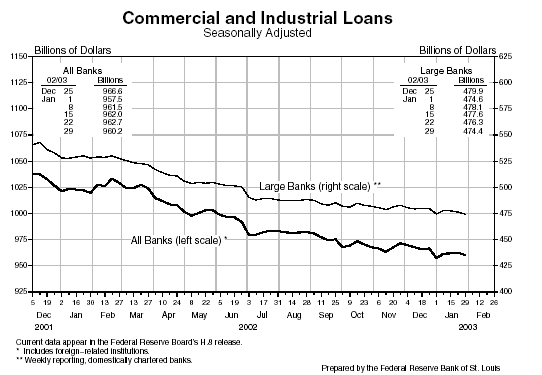
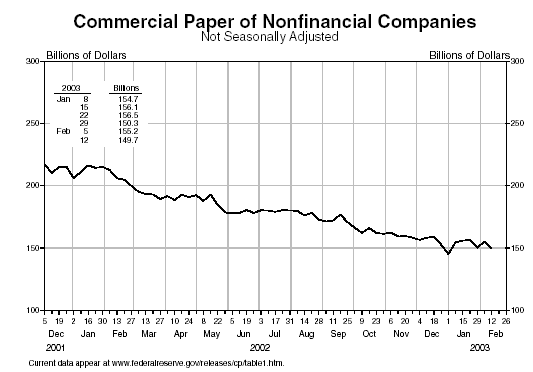
market. Commercial lending at the end of
January remained moribund. The commercial paper data, which
are more current shows that things are still dead this week. Lots of this
loans are being converted in the Asset Backed Securities Market, and we
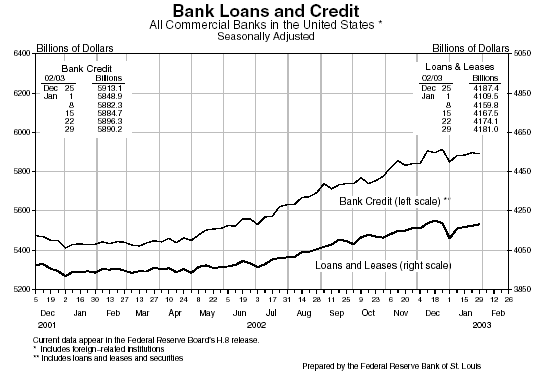
know how healthy that market is. Total bank credit at the end of
January was below December levels. With C&I loans in decline
throughout the year, the rise in total credit had been driven purely by
consumer lending. Last week I pointed out that the flattening in total
credit reflects a sharp drop in consumer credit. Lo and behold today we found
out that auto sales had fallen off the cliff last month. All is not well
in credit bubble land. The signs of a tightening liquidity noose are
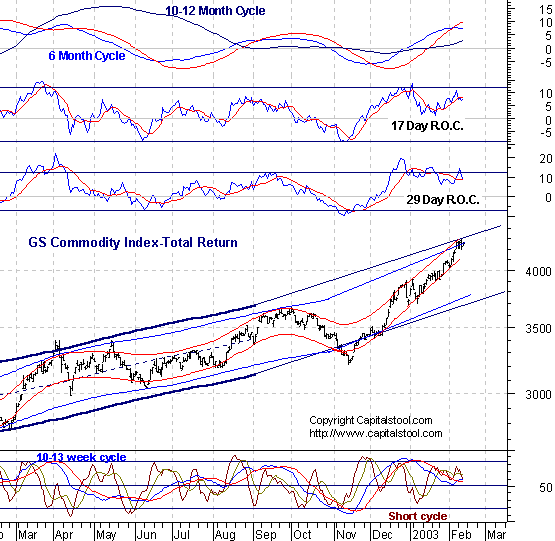
everywhere. Without growing loan demand, the bubble goes kaput as loan losses begin to overtake income. Meanwhile, in the Department of Yes We Have No Inflation, industrial metals prices broke in sympathy with gold, but the powerful overall commodity price trend barely paused, driven by steadily rising energy prices. The Fed and the poodits are not the least bit worried about inflation. They are still fighting the last war. What else is new.
In the stock market, the preconditions for a 6-7 week cycle up phase are in place. Whether it retests or makes a new low, the next week or two should see a sideways up phase (swup) unfold, similar to the ones which have occurred in the middle of past declines. It will be short, possibly violent, and choppy, but in the end it will fail and the market will head lower in a week or two.
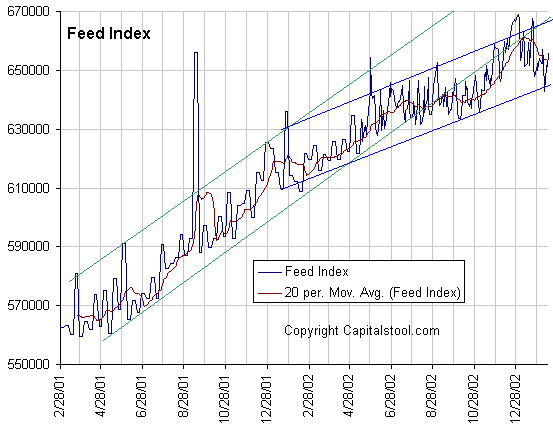
Doc's Pooper Scooper. Be a Johnny Applestool! Help spread the Stool! Feel free to repost snippets from the Anals on message boards around the web. Just give a link back! Many tanks - Doc The Feed added $4.75 billion in 7 day repos and rolled over $4 billion in 28 day repos for a net addition of $4.75 billion. There are no expirations Friday. This looks like the beginning of a turn up in the Feed Index. Al may be preparing for war, and the overwhelming demand for plastic wrap and duct tape. If this crisis deepens he will open the floodgates. The market would respond within a week or two. We need to be wary of another liquefaction like the one in September 2001. It will turn the market and trigger another one of those patented bear market rallies we have all grown to hate so much. Two
trends are evident on the Feed Index, which is the total Fed holdings of
loans and securities. One is the 10% growth trend beginning in May of
2001. The blue channel going back to last December suggests a 5% growth rate. Look at the 4 week moving
average (brown line) and compare it with the slope of the two larger
channels for an indication for whether the slope of short term growth is
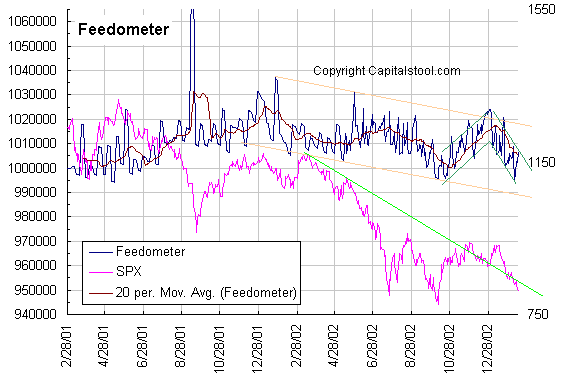
slower or faster than the 2 longer term trends. The Feedometer is primed for a reversal. It would take a huge upturn to move the market. Sometimes the market follows, and sometimes it doesn't. In the end, the money can be there, but the Gang of 22 is free to put it where it sees the greatest opportunity or sometimes, just safety. The
Feedometer theoretically measures excess Feed available for bond or stock
market jamming. Al selects a trend level he feels is needed to reflatulate
the economy. The Feedometer measures the difference between the apparent
trend target, and actual day to day Feeding (Fastow Feedometer), as well
as a four week moving average (Slowmo Feedometer). A break above the
orange trendline might indicate a more aggressive jamming policy. 10 Year Bond yields fell again. Short cycle
cmaps moved down to 3.70-75. Indicators are starting to line up to the downside.
If 3.70 is broken, yields could head for a retest of the lows in the next couple
of weeks. The 10-13 week cycle cmap does not indicate that yet. Dow Inflatables-
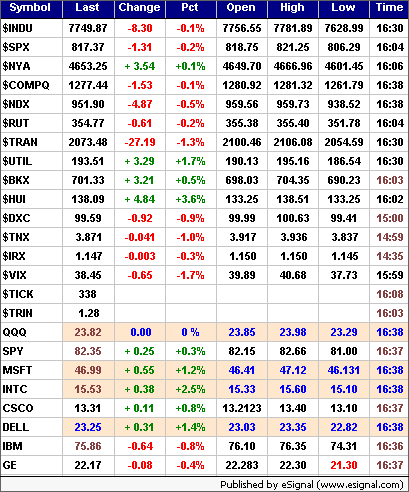
The Dow fell through its 13 day cycle downside cmap of 7700 and suddenly
reversed. It also ticked its 6-7 week cycle cmap of 7640. The low for that
cycle was due this week. Too close for comfort. The question is how much
oomph the up phase will have. The 4 week cycle rolling over and the 10-13
week cycle still down for at least another month. Doc is guessing we'll
have a very choppy few days before heading into the final wave down for
this 10-13 week cycle. The downside cmap is 7100 to 7300. All of Doc's daily cycle charts
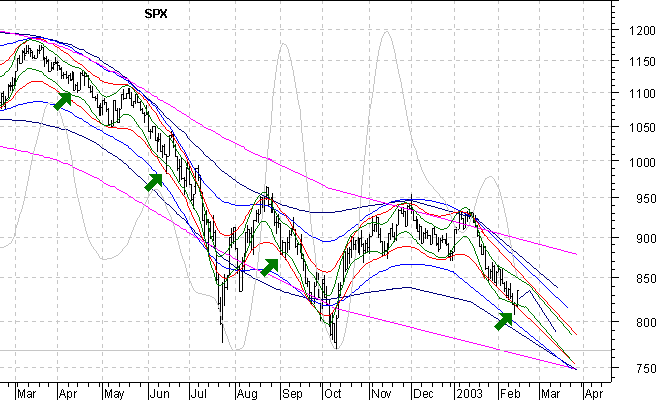
are powered by METASTOCK Portfolio Sphincters Index (SPX) and Sentiment Cycle Chart Short Term Cycles The short cycle oscillator still has not reversed. The bottom window is open for the 6-7 week cycle and the cmap expanded to 800-820. This is a bottom phase. The downturn due in the 4 week cycle seems likely to keep a lid on the 6-7 week cycle up phase, allowing the 10-13 week cycle down phase to govern but expect a week or so of possibly severe chop. The 6-7 week cycle oscillator on the chart below upticked again. We saw similar action in late June and late September. This is the beginning of a divergence that will lead the final low of the cycle by about a month. The 17 day rate of change (chart below) turned, but again, a significant bottom is usually preceded by a positive divergence. This is just the preliminary bounce. 10-13 Week Cycle Roughly 5 to 8 weeks should remain in the 10-13 week cycle down phase. The cycle oscillators continue to move slowly lower. The one in the top chart is in the bottom zone, but it can bounce around down there for weeks while the market trends lower. The breakdown in the 29 day rate of change suggests that any near term bounce will be transitory. There will be no substantial rally until all of these indicators turn up in concert. The preliminary cmap for this cycle, which had been oscillating between 770 and 820, dropped to 710-750. The 6 month cycle cmap due for a concurrent low is down to around 730. The cmap could still drop again in particular if the next couple of days are down hard. Sentiment VIX fell. (up on the inverted scale chart). In the context of the current cycle, the reading is neutral. The next significant intermediate cycle low should reach at least 50-60.
The 17 day rate of change is a proxy for the
6-7 week cycle. The 29 day rate of change is a proxy for the 10-13 week
cycle. The dark blue overlaid line is the 10-13 week cycle
oscillator, while the red line is the 6-7 week cycle oscillator. The VIX
is a measure of implied options volatility reflecting relative fear or
complacency. It is plotted below on an inverse scale to better show the
relationship to the price chart. The "Stool Bands" may reflect
either 6 month or 10-12 month cycles. The Cycle Conditions tables include cycle phase and a wild guess as to number of periods to the next turn, in days for the shortest cycles, weeks (W) or months (M) for the longer ones. This is a fluid exercise, in other words, the projections are likely to be wrong, but they force us to be vigilant for key turning points, and frequently work well enough to prevent costly misreadings. SPX Cycle Conditions as of 2/13/03
PTT - Periods Till Turn Suctor Watch and Stoolwethers- Updated each morning between 8 AM and 9:00 AM NY time. Nasgap Charts The Nas is expected to behave more like the SPX with the continued de-weighting of tech. In the interest of publishing the Anals earlier in the evening Doc is presenting the charts and data without commentary, as it is largely redundant relative to the SPX commentary above. Cycle Chart Nasdaq Cycle Conditions as of 2/13/03
PTT
- Periods Till Turn Suctor Watch and Stoolwethers- Updated each morning between 8 AM and 9:00 AM NY time. Long Bong Hit - See top of page. Golden Stool 2/13/03 PM Gold bounced back a bit from the recent clobbering. The increase in margin requirements caused a massive shakeout. The 4 week cycle cmap rose to 353 which was hit. The 13 day cmap remains 347-353. Long term upside cmaps have come down, now at only 385. The 9 month cycle oscillator looks like it is rolling over. Short cycle lows are due any day this week or next. Doc is expecting a pretty good snapback, but it will probably be part of a new trading range of 350-385, lasting months.
Charts as of 2/13/03 Close HUI did the down yoyo thing and could crack Monday's lows by a bit. The 4 month (or 13 week, take your pick) cycle has been in a sideways down phase for 6 weeks. The bottom is due any day now as are short cycle lows. Cmaps are now generally 125-133. We don't want to see a rollover in the 10-12 month cycle oscillator. That would not be a good thing. HUI Cycle Conditions as of 2/13/03
Uncle Buck's Illness Uncle Buck got smashed after hitting short cycle upside cmaps at 101 in the last couple of days. The 13 day cycle downside swup is 98.50. It's too early to conclude that the 13 week cycle swup is over, however. Longer term cmaps have risen to mid 90's by mid year, but may be as low as 80 looking toward 2004. If Buck weakens near term, the stock market will follow. Chart as of 2/13/03 close Uncle B and SPX (gray line on chart)
usually move together because Uncle Buck's index measures the flow of
capital into and out of US paper assets. The relative magnitude of the
moves varies and wide divergences are followed by convergence.
Central banks intervening to buy dollars are not
going to help stock prices, and cannot drive sustainable advances in the
dollar. Get StoolieSignal Special offer here only! Suctor Watch and Stoolwethers- Now posted on separate page. Updated each morning between 8 AM and 9:00 AM NY time. See you in Intraday Stool. Dr. Stepan N. Stool Share your thoughts on the Stool Pigeons Wire.
Renewals Thank you for subscribing to the Anals of Stock Proctology. Your trial subscription will run for 90 days. At the end of that period your subscription will renew automatically, unless you cancel. If you wish to cancel your subscription use the button below. If you want to renew your subscription do nothing. Your subscription will renew and your credit card or Paypal bank account will be charged. If you want to renew, be sure your credit card information in your Paypal account is current. Paypal will not renew your subscription if the card has expired!
Explanation of Intraday Commentary-Build charts at http://www.livecharts.com. For custom time bars insert a comma after symbol and number of minutes, e.g. compx,90. This will give you a bar chart of the Nas with 90 minutes per bar. The one day cycle is usually most clear with 8 minute bars and 26/18 stochastics. It varies from day to day. Sometimes 6 minutes works best. Experiment to find the best fit for your trading style, and the market's dominant frequency at the time. The goal here is primarily to monitor the condition of the 8 and 13 day cycles. I typically use 90 minute bars with 26/18 stochastics for the 13 day cycle proxy on the indices during regular trading hours. Other cycles use 26/18 stochastics with the following: 8 days- 60 minute bars On the 24 hour futures charts, use a time per bar approximately 3 to 4 times the above number of minutes, to represent the cycles listed above. About centered moving average projections. ABBREVIATIONS: cma: centered moving average |





 . (Sorry
about the bull.)
. (Sorry
about the bull.) 


![[Most Recent HUI from www.kitco.com]](http://www.weblinks247.com/indexes/idx24_hui_en_2.gif)
![[Most Recent XAU from www.kitco.com]](http://www.weblinks247.com/indexes/idx24_sp500_en_2.gif)
![[Most Recent Quotes from www.kitco.com]](http://kitconet.com/charts/metals/gold/t24_au_en_usoz_2.gif)
